Future-Proof Senior Care: How to Select an Assisted Living Home That Adjusts to Altering Requirements
@augustqerm856
Business Name: BeeHive Homes of Mesquite
Address: 780 2nd S St, Mesquite, NV 89027
Phone: (702) 381-6899
BeeHive Homes of Mesquite
At BeeHive Homes of Mesquite, Nevada, we offer the finest assisted living experience available in a cozy, comfortable homelike setting. Each of our residents has their own spacious room with an ADA approved bathroom and shower. We prepare and serve delicious home-cooked meals three times a day every day. We maintain a small, friendly elderly care community. We provide regular activities that our residents find fun and contribute to their health and well-being. Our staff is attentive and caring and provides assistance with daily activities to our senior living residents in a loving and respectful manner. We would like to invite you to tour and experience our assisted living home and feel the difference.
780 2nd S St, Mesquite, NV 89027
Business Hours
Families seldom start taking a look at assisted living neighborhoods since whatever is calm and predictable. Typically there has actually been a fall, a hospital stay, a wandering occurrence, or a sluggish build-up of small concerns that no longer feel small. The immediate impulse is to resolve the problem in front of you: "We require a safe location where Mom can get assist with showers and medications."
That instinct is understandable, but it is likewise where lots of people make their most significant error. They look for what their parent needs this month, not what they are likely to need three, 5, or 8 years from now. The outcome is preventable interruption, unforeseen expenses, and agonizing relocations at the very point when stability matters most.
Future-proof senior care starts with asking a various question: not just "Is this an excellent assisted living home for today?" but "Will this neighborhood still fit if things get more made complex?"
Drawing on what I have seen in senior care over several years, including both exceptional and deeply flawed positionings, here is how to evaluate an assisted living home with an eye on the long arc of aging, not simply the present moment.
Understanding how requirements generally alter over time
Every individual ages in their own way, yet specific patterns appear so often that ignoring them is risky. When households just take a look at current needs, they ignore how fast the care photo can change.
Most citizens who move into assisted living need help with a handful of things: perhaps medication pointers, meal preparation, house cleaning, or some support with bathing and dressing. They are normally still social, still able to speak for themselves, and often still driving or a minimum of directing their own days.
Over the years, numerous elements tend to shift:
- Mobility slowly decreases. Somebody who strolls independently today may need a walker in a couple of years, and a wheelchair after that. Stairs become a barrier, long hallways become stressful, and fall risk rises.
- Medical complexity increases. A resident may start with well-controlled diabetes and high blood pressure, then develop cardiac arrest or COPD, or need anticoagulation, or go through a stroke or a joint replacement, each adding tracking and care tasks.
- Cognitive changes creep in. Moderate forgetfulness can advance to substantial amnesia, confusion, or dementia. Habits like wandering, agitation, or nighttime wakefulness might appear.
- Continence and individual care needs modification. Toileting assistance, incontinence care, and more hands-on help with bathing, grooming, and dressing usually increase.
- Emotional and social needs evolve. Buddies at the community pass away or move away. A spouse passes. A once-outgoing resident may become withdrawn or depressed.
When you tour an assisted living neighborhood, you are satisfying it during the honeymoon phase: your parent is new, personnel are attempting to impress, and requirements are reasonably modest. A better test is this: "If my parent is twice as frail as they are now, would this location still work?"
That state of mind shifts what you focus to.
Levels of care: what can remain, what must move
The terms "assisted living," "memory care," and "skilled nursing" sound clear, however they are not standardized in practice. Each state licenses these differently, and each operator defines its own limits.
For future-proof preparation, you wish to comprehend 2 things very exactly: how far the neighborhood can increase support, and where their tough stop lies.
In numerous regions, you will encounter three broad tiers:
- Assisted living for citizens who need assist with activities of daily living, but do not need 24/7 nursing.
- Memory care, either as a separate locked system within the very same community or as a various building, for citizens with dementia who require more supervision and a structured environment.
- Skilled nursing (nursing homes) for homeowners with complex medical requirements that require continuous nursing assessment, frequent treatments, or rehabilitation services.
The challenge is that "assisted living" can mean very various things. Some buildings can deal with sliding-scale insulin, catheter care, two-person transfers, or hospice coordination. Others can not. Some memory care units are effectively assisted living with a door lock, hardly equipped to manage serious behavioral needs. Others are truly specialized, with experienced personnel, individualized programming, and strong medical partners.
Ask specifically:
- What sort of care can not be provided here, even with outside help?
- At what point would my parent be required to move to a higher level of care?
- Are there locals here who are on hospice? Who use wheelchairs full time? Who need 2 staff to help transfer?
- If my parent eventually needs memory care, do you offer it within this neighborhood, or would they transfer to a different building or provider?
A future-proof choice is not always the one that can do everything, but the one that is clear and honest about its boundaries, which has a sensible, caring plan for residents whose needs grow.
The anatomy of a versatile care plan
A static care plan is a warning. Aging is vibrant, so senior care needs to be too. When a neighborhood treats the care plan as paperwork done at move-in and revisited just during crisis, residents either get too little assistance or spend for services they do not use.
Look for a care preparation procedure that has numerous traits.
First, it should be multidisciplinary. The nurse, caretakers, activities personnel, and preferably a member of the family should have input. I have actually beinged in too many meetings where the care strategy showed only what the intake nurse saw on a single afternoon, never ever the family's truths or the frontline personnel's observations.
Second, it ought to be arranged for regular review, not just "as needed." Every 6 months is decent, every 3 months is better, and any hospitalization or significant health change must trigger an interim review. Ask how frequently care strategies change for present homeowners, and what normally triggers an adjustment.
Third, the care plan ought to be detailed enough to tell a brand-new caretaker what "help with bathing" truly implies. Does your parent need cueing, or hands-on assistance? Exist security concerns or preferences, such as water temperature, use of grab bars, or modesty issues? The more accurate the paperwork, the more regularly your parent will receive care as staff turnover occurs, which it inevitably will.
Finally, the neighborhood needs to have the ability to scale services without drama. If your parent starts needing assistance in the evening rather of just during the day, or shifts from partial to full support with dressing, you want those changes to be manageable changes, not reasons to recommend moving out.
Staffing: the silent predictor of future quality
Floor plans and chandeliers do not change the standard math of care. Individuals do. Whenever I ask families what mattered most to them in retrospect, staffing quality and stability always sit at the top of the list.
You can hear a lot about future adaptability by asking direct, often uncomfortable questions about staff:
- What is the caregiver-to-resident ratio on days, nights, and nights?
- How frequently are nurses physically in the structure? Are they on-site 24/7 or on call after specific hours?
- What is your yearly staff turnover rate? What about for the executive director, nurse leader, and frontline caregivers?
- How lots of agency or temperature workers do you depend on in a common month?
- How do you guarantee constant training in dementia care, fall prevention, and infection control?
A neighborhood with stable leadership and low turnover typically adjusts better to citizens' altering requirements. Staff understand the citizens, notice subtle decreases, and can adjust regimens before emergency situations happen.
Conversely, a building that looks full of energy during your tour, but silently counts on rotating temp personnel and constant hiring, may have a hard time when your parent's requirements become more complicated. The care intend on paper will sound outstanding, however the genuine, daily care will be inconsistent.
Watch, too, how caregivers engage with existing locals as you walk. Do they speak respectfully? Usage names? Respond rapidly to call lights? A staff that deals with current citizens well is more likely to promote when your parent requires extra attention or a brand-new approach to care.
Medical support and partnerships: who is actually seeing the health curve
Assisted living is not a healthcare facility or a complete medical center, however it sits at the crossway of real estate and health care. The method a community handles that crossway has massive implications for long-lasting stability.
The essential concern is not whether there is a doctor in the structure every day. It hardly ever occurs. The more appropriate questions issue how medical oversight is arranged and how responsive it is.
Ask whether there is an affiliated primary care practice that sees locals on-site. Many progressive neighborhoods partner with geriatricians or nurse practitioner groups who conduct routine rounds in the structure. This helps capture issues early: weight loss, medication adverse effects, subtle cognitive changes.
Equally crucial is the community's relationship with home health, hospice, therapy service providers, and medical facilities. A future-proof assisted living home should currently have strong paths for:
- Home health nursing visits after a hospitalization
- Physical, occupational, or speech therapy provided on-site
- Smooth transitions to and from respite care or rehab stays
- Hospice services integrated into the resident's apartment
When these relationships work, a resident can frequently remain in familiar environments through severe illness, instead of being bounced consistently between health center, rehabilitation, and long-term care. That stability matters as much for families as for the elder.
The role of respite care in screening fit and flexibility
Respite care is often dealt with as a side service, something households may use for a week or more during a caregiver holiday or after surgical treatment. Utilized thoughtfully, it ends up being a low-risk method to test a neighborhood's ability to adjust to real-world needs.
A short-term respite stay lets you see how staff deal with medication changes, sleep disruptions, mobility concerns, or behavioral peculiarities in practice, not simply guarantee. It exposes whether the "we can absolutely handle that" you heard during the tour equates into real competence.
When you organize respite care, focus on process more than polish. Notification how the community collects details about your parent: do they ask in-depth questions, or simply basic demographics and medical diagnoses? Do they take interest in your parent's routines, routines, and fears?
During and after the stay, observe how interaction flows. Did they inform you immediately to any problems or changes? Were they open to your feedback? If you heard "we do not usually do it that way" more than when, that is a sign that versatility might be limited.
If a community handles respite care with thoughtfulness, excellent documentation, and very little drama, it is a positive sign that they can react to modifications when your parent lives there full-time.
Environment and style that age gracefully
Architects enjoy to display grand lobbies, high ceilings, and fancy features. Those features might catch a purchaser's eye in a hotel, but in elderly care they are lesser than useful design that still works when somebody is ten years older and substantially more fragile.
When you walk through, picture your parent slower, less consistent, possibly using a walker or wheelchair, maybe more easily confused.
Watch for things like:
- The range from houses to dining rooms, activity areas, and outdoor locations. Long hallways that feel fine at 78 become intimidating at 88.
- The variety of modifications in floor covering, limits, or small actions that can catch a foot or walker wheel.
- Handrail positioning, lighting levels, and contrast between flooring and wall colors, which help individuals with visual or cognitive decline navigate securely.
- Built-in features such as walk-in showers with seating, grab bars, and adequate area for two people if one day your parent requires hands-on assistance.
- Quiet areas that are not their apartment, where someone with dementia can sit without being overstimulated by sound or crowds.
Also take a look at memory hints. Are there clear room numbers and personalized hints on doors? Are corridors distinguishable, or does every corner look similar? Residents with cognitive loss frequently do far better in environments with visual anchors: colored doors, special artwork, small household-style layouts.
A structure does not need to look like a health center to be safe. The sweet spot is a home-like environment that is discreetly, attentively engineered for a wide variety of physical and cognitive abilities.
Activities and social structure that can bend with ability
When individuals tour an assisted living home, they often glimpse at the activity calendar to make certain there is "enough to do." That informs just a portion of the story. The real question is whether the social life of the community changes as residents decrease, lose hearing, or establish dementia.
A future-proof program has layers: group activities for active homeowners, smaller and quieter choices, and individually engagement for those who can no longer sign up with groups. It also acknowledges that interests change. Somebody who enjoyed bingo at 75 may be exhausted by it at 85 yet still respond warmly to music, gentle discussion, or time in a garden.
Ask how the group approaches homeowners who rarely leave their spaces. Do they make customized efforts, or simply mark them "not interested"?
Look at who is really getting involved, not simply what is provided. Are the most frail citizens noticeable in the typical areas at all, with some level of support, or do they appear unnoticeable? Neighborhoods that purchase bringing engagement to locals, instead of expecting homeowners constantly to come to them, adjust better to increasing frailty.
This is not almost lifestyle. Social seclusion can speed up cognitive and physical decline. A well-run activity program is a type of preventive care.
Money, models, and avoiding monetary traps
Future-proofing senior care is not simply medical. It is financial. Households are often amazed by how billing structures work when requires increase.
Assisted living prices usually follows among three designs:
- All-inclusive, where a flat month-to-month rate covers room, board, and a broad package of services.
- Tiered, where residents pay a base rate plus surcharges for specified "levels" of care.
- A la carte, where each particular service, from medication management to escorts to meals, brings a different fee.
None of these is inherently good or bad. The crucial thing is to comprehend how costs will move as care intensifies.
Ask for concrete examples, not just pamphlets. What did a resident pay when they moved in with light support, and what do they pay 3 years later with moderate needs? How does the community deal with situations where somebody outlives their funds? If they accept Medicaid, what is the process and exist restricted Medicaid-designated apartments?
I have actually seen families who chose a low base rate community, just to be shocked later by an ever-growing list of small line products: support to the dining-room, help with listening devices, additional laundry. The reverse likewise occurs: a greater all-inclusive rate that at first appears costly ends up being stable and predictable over several years, particularly for those with rapidly increasing needs.
Future-proof options consider not only "Can we manage this this year?" but "What occurs if we need two times as much care and we are still here?"
Family participation and communication as needs change
Even in the best assisted living neighborhoods, what households do or do not request makes a distinction. A culture that welcomes, instead of tolerates, family participation is one of the clearest indications that a home will handle change well.
During your evaluation, take note of whether staff appear defensive when you ask in-depth concerns. A strong community will react with specifics, not unclear peace of minds. They welcome household into care conferences, not simply when there is a problem however as a routine part of planning.
Notice how they communicate about events and modifications. Do they inform you promptly if your loved one has a fall, even without injury? Do they keep you upgraded on weight modifications, sleep disruptions, or new habits that recommend discomfort or infection?
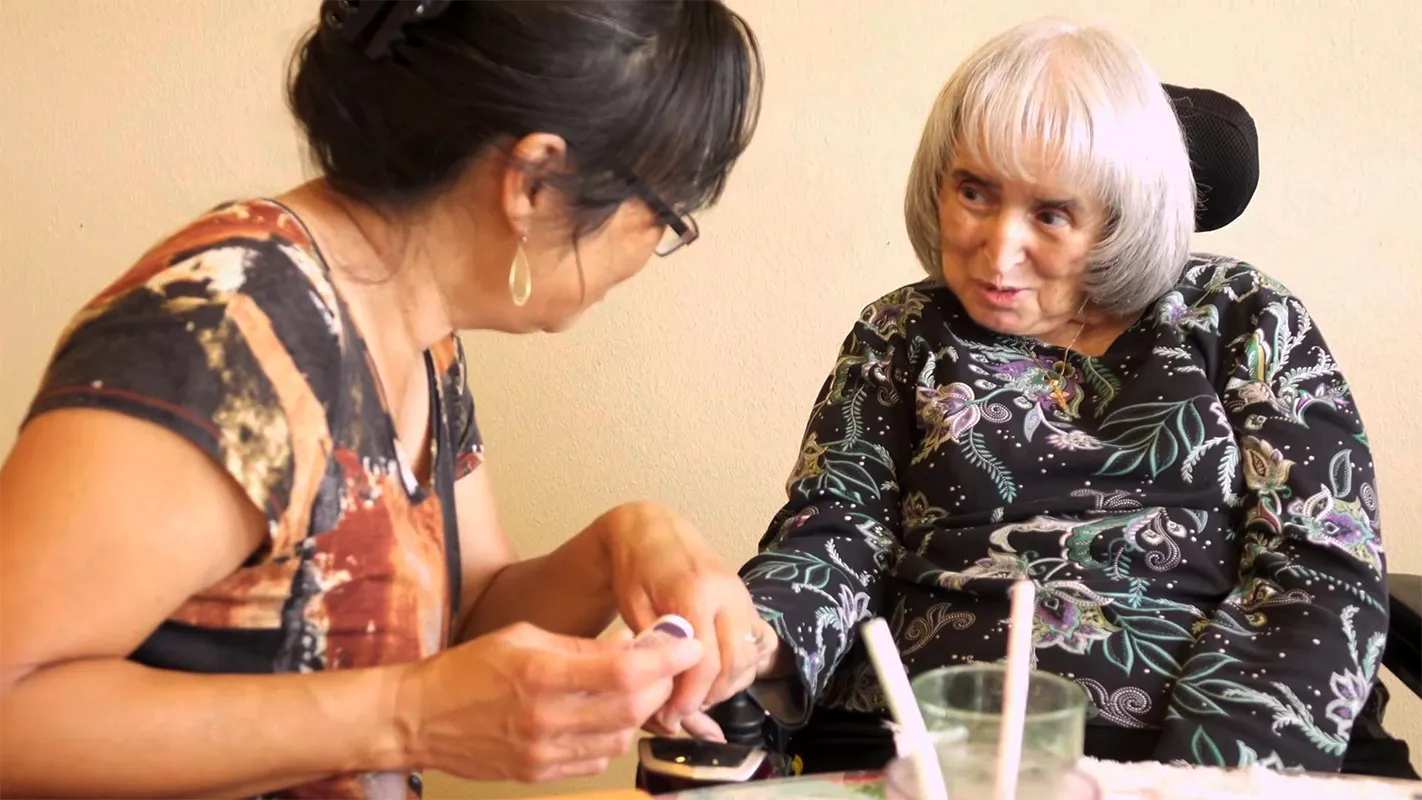
The goal is a partnership. Families understand the elder's history, personality, and choices. Personnel see the everyday patterns and small shifts. Future-proof senior care takes place when those 2 sources of knowledge are woven together, not when either side works in isolation.
A focused list for future-proof evaluation
Use this list during trips and discussions, not as a scorecard, however as triggers for much deeper discussion.
- Does the community plainly describe what care they can not provide and when a resident must move?
- How typically are care plans reviewed, and who takes part in that process?
- What is the personnel turnover rate, and how stable has management been in the last 3 to five years?
- How does the neighborhood manage hospitalizations, rehab stays, and the integration of home health, therapy, or hospice?
- Can they offer specific examples of citizens who have actually "aged in location" there for several years through increasing needs?
The way staff respond to these concerns will expose more about their capability to adjust than any glossy brochure.
When moving twice is better than picking inadequately once
Families sometimes feel huge pressure to discover "the forever place" on the very first try. That pressure can lead to stalemates or to enduring poor fit because "moving once again later on would be horrible."
There is reality because issue. Moves are disruptive, and older grownups can decline assisted living mesquite nv after each transition. Yet holding on to a bad match simply since it may be "the last relocation" frequently backfires. A neighborhood that looks future-proof on paper however is weak in culture, communication, or day-to-day care will not all of a sudden enhance as your parent's needs deepen.
Sometimes the very best course is staged: a smaller assisted living community for a few years, then a transfer into a school with incorporated memory care, or from a private-pay setting to one that participates in Medicaid once long-term finances are clearer. The key is to choose each step purposefully, with an eye on the likely next one, rather than viewing every decision as irreversible.
An uncommon but essential edge case involves couples with very various needs. One partner may require memory care, while the other still drives, cooks, and mingles. In these circumstances, future-proofing often means focusing on campus-style settings where both assisted living and memory care are readily available in close proximity, even if it suggests some compromise on other choices. Keeping spouses linked, instead of across town in various facilities, matters exceptionally over time.
Bringing everything together
Choosing an assisted living home is not simply about granite countertops, restaurant-style dining, or a hectic activity calendar. It is a decision about how your parent will weather the storms that have not yet gotten here: a damaged hip, a sudden confusion episode, a progressive dementia, a sluggish slide in strength and stamina.
Future-proof senior care rests on a handful of core truths. Needs will alter. Crises will happen. Financial resources will evolve. What you are truly choosing is a partner in that uncertainty.
When you discover a community that is sincere about its limitations, disciplined in its care preparation, thoughtful in its design, steady in its staffing, well linked to medical partners, and open up to family partnership, you are not simply resolving today's issue. You are constructing a structure around your parent's life that can flex, adjust, and respond as the years unfold.
That is what it suggests to pick an assisted living home that genuinely adjusts to changing needs, and it is one of the most concrete presents you can offer to both your loved one and to yourself.
BeeHive Homes of Mesquite provides assisted living care
BeeHive Homes of Mesquite provides respite care services
BeeHive Homes of Mesquite supports assistance with bathing and grooming
BeeHive Homes of Mesquite offers private bedrooms with private bathrooms
BeeHive Homes of Mesquite provides medication monitoring and documentation
BeeHive Homes of Mesquite serves dietitian-approved meals
BeeHive Homes of Mesquite provides housekeeping services
BeeHive Homes of Mesquite provides laundry services
BeeHive Homes of Mesquite offers community dining and social engagement activities
BeeHive Homes of Mesquite features life enrichment activities
BeeHive Homes of Mesquite supports personal care assistance during meals and daily routines
BeeHive Homes of Mesquite promotes frequent physical and mental exercise opportunities
BeeHive Homes of Mesquite provides a home-like residential environment
BeeHive Homes of Mesquite creates customized care plans as residents’ needs change
BeeHive Homes of Mesquite assesses individual resident care needs
BeeHive Homes of Mesquite accepts private pay and long-term care insurance
BeeHive Homes of Mesquite assists qualified veterans with Aid and Attendance benefits
BeeHive Homes of Mesquite encourages meaningful resident-to-staff relationships
BeeHive Homes of Mesquite delivers compassionate, attentive senior care focused on dignity and comfort
BeeHive Homes of Mesquite has a phone number of (702) 381-6899
BeeHive Homes of Mesquite has an address of 780 2nd S St, Mesquite, NV 89027
BeeHive Homes of Mesquite has a website https://beehivehomes.com/locations/mesquite/
BeeHive Homes of Mesquite has Google Maps listing https://maps.app.goo.gl/FouNDQWSGjDorrdT7
BeeHive Homes of Mesquite has Instagram page https://www.instagram.com/beehivehomesmesquite/
BeeHive Homes of Mesquite has an TikTok page https://www.tiktok.com/@beehivehomesofmesquite
BeeHive Homes of Mesquite has an YouTube page https://www.youtube.com/@hamiltonshives4468
BeeHive Homes of Mesquite won Top Assisted Living Homes 2025
BeeHive Homes of Mesquite earned Best Customer Service Award 2024
BeeHive Homes of Mesquite placed 1st for Senior Living Communities 2025
People Also Ask about BeeHive Homes of Mesquite
What is BeeHive Homes of Mesquite Living monthly room rate?
Our base rate is $4,400/month plus a one-time community fee of $1,500. We do an assessment of each resident's needs upon move-in, so a resident's rate may be slightly higher. Based on the assessment, a resident may be in Tier I, II, or III with pricing from $4,900 to $5,300 per month. However, we do not add any "a la carte" charges after that rate is set. There are no add-ons or hidden fees
Does Medicare or Medicaid pay for a stay at Bee Hive Homes?
Medicare pays for hospital and nursing home stays, but does not pay for assisted living. Some assisted living facilities are Medicaid providers, but we are not. We do accept private pay, long-term care insurance, and we can assist qualified Veterans with approval for the Aid and Attendance program
Do we have a nurse on staff?
We do have a nurse on contract who is available as a resource to our staff but our residents' needs do not require a nurse on-site. We always have trained caregivers in the home and awake around the clock
What can you tell me about the food at Bee Hive?
You have to smell it and taste it to believe it! We use dietitian-approved meals with alternates for flexibility, and we can accommodate needs for different texture and therapeutic diets. We have found that most physicians are happy to relax diet restrictions without any negative effect on our residents
Do we have a pharmacy that fills medications?
We do have a relationship with an excellent pharmacy that is able to deliver to us and packages most medications in punch-cards, which improves storage and safety. We can work with any pharmacy you choose but do highly recommend our institutional pharmacy partner
Where is BeeHive Homes of Mesquite located?
BeeHive Homes of Mesquite is conveniently located at 780 2nd S St, Mesquite, NV 89027. You can easily find directions on Google Maps or call at (702) 381-6899 Monday thru Sunday: 8:00am to 7:00pm
How can I contact BeeHive Homes of Mesquite?
You can contact BeeHive Homes of Mesquite by phone at: (702) 381-6899, visit their website at https://beehivehomes.com/locations/mesquite/ or connect on social media via Instagram Facebook or TikTok
Gregory's Mesquite Grill offers a comfortable setting for family meals and visits with loved ones receiving Assisted living memory care senior care elderly care and respite care.